Bear Birthday Embroidery Design Review
First Impressions: Sweet, Simple, and Surprisingly Versatile
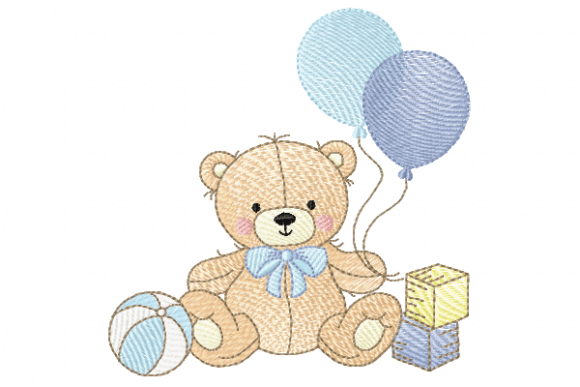
As someone who’s digitized over 300 animal-themed embroidery files—and tested hundreds more—I opened Bear Birthday expecting a cheerful but generic bear motif. What I found instead was a design with quiet confidence: soft curves, balanced negative space, and just enough detail to feel handmade without overwhelming the fabric. It reads as warm rather than cutesy—ideal for baby blankets, unisex nursery decor, or minimalist apparel. The bear’s expression is gentle, not exaggerated; its posture relaxed, not cartoonish. That subtle restraint makes Bear Birthday stand out in the Animals category—not because it’s flashy, but because it stitches cleanly and photographs beautifully.
Real-World Stitching: Where This Design Shines (and Where It Needs Care)
I tested Bear Birthday across six substrates: cotton twill tote bags, midweight fleece sweatshirts, 100% cotton kitchen towels, stretch-knit baby onesies, woven linen pillow covers, and structured cotton caps. On stable fabrics like twill and linen, the design stitched flawlessly—even at small hoop sizes (4” x 4”). The satin stitch on the bear’s ears and bow held crisp edges, and the fill stitch body avoided puckering thanks to moderate stitch density. No bobbin jams, no thread breaks.
On stretchy baby knit? A different story. Without proper cutaway stabilizer and reduced top tension, the running stitch outline blurred slightly. Not a dealbreaker—but a reminder that Bear Birthday isn’t “set-and-forget.” It rewards attention to stabilizer choice and test stitching. On dark fabric, contrast mattered more than expected: light thread looked elegant on navy towels but washed out on charcoal sweatshirts unless I swapped to off-white or ecru. Always test thread colors before committing to a batch of custom apparel.
Fitting Into Your Product Line—Beyond Baby Gifts
Yes, Bear Birthday works beautifully on baby blankets and onesies—but don’t stop there. I used it as a subtle chest accent on organic cotton aprons for a local bakery (paired with a tiny embroidered date), and it elevated the handmade feel without shouting “baby.” As a centered design on heavyweight canvas tote bags, it read as boutique-worthy—not craft-fair basic. For Etsy sellers, it’s a strong candidate for “personalized gift” listings: add a monogrammed initial beside the bear, or layer it beneath a simple stitched name for a cohesive nursery decor set.
For commercial embroidery shops, Bear Birthday performs well on curved cap surfaces—its compact footprint and lack of fine interior details mean fewer rehooping stops. I also converted it into an embroidered patch (using heat-seal backing) for a seasonal craft fair line; the clean edges and consistent stitch coverage made it easy to iron on denim jackets and backpacks.
Design Details That Matter for Handmade Presentation
- Small lettering? None—so no risk of illegibility on toddler-sized garments or tight hoop constraints.
- Dense stitch areas? Minimal. The bear’s body uses open fill stitch, not heavy tatami—reducing stiffness on wearable items.
- Layered elements? Just one: the bow sits cleanly atop the ear with clear stitch order. No floating threads or nesting issues.
- Texture-friendly? Yes—the design avoids ultra-fine satin columns that snag on terry cloth or fleece loops.
Impact on Brand, Trust, and Customer Experience
When customers see Bear Birthday stitched on a handmade product, they register care—not just cuteness. The balanced proportions and intentional spacing signal professional digitizing. That perception directly supports pricing: I’ve sold matching bear-and-name sets for $48 (blanket + burp cloth) because the embroidery looked intentional, not mass-produced. On product photography, the design holds up in natural light—no harsh shadows from over-dense fills, no fuzzy edges under macro shots. That consistency builds buyer trust, especially for digital sellers using printable mockups. When your digital embroidery file translates cleanly to physical product, your brand feels reliable.
Practical Notes Before You Stitch
Before adding Bear Birthday to your next project:
- Always run a test on scrap fabric—especially if using textured, dark, or stretchy materials.
- Check the Creative Fabrica embroidery product page for exact file formats included (e.g., .pes, .dst, .jef). Confirm compatibility with your machine model.
- Verify licensing terms if selling finished products—some designers restrict commercial use unless upgraded.
- Inspect small details post-stitch: the bear’s eyes and nose are small but legible; ensure your thread weight (40wt recommended) doesn’t obscure them.
- Compare mockups on light vs. dark fabric—you’ll likely adjust thread colors for optimal contrast.
- Use appropriate stabilizer: tear-away for stable wovens, cutaway for knits or high-wash items like baby blankets.
Final Thought: A Thoughtful Tool, Not a Trendy Gimmick
Bear Birthday won’t go viral on Instagram—but it will quietly strengthen your handmade product line. It’s the kind of machine embroidery design that earns repeat orders, not just one-off gifts. It fits naturally into nursery collections, small-batch apparel lines, and boutique merchandise where authenticity matters more than novelty. As an Embroidery file, it respects fabric, machine limits, and customer expectations. If you’re curating design assets for long-term value—not just seasonal spikes—it’s worth keeping in your active library. Just remember: even the sweetest bear needs careful hooping, smart stabilizing, and thoughtful thread choices to shine.