Canadian Flag ITH Feltie Applique
A Clean, Confident Statement—Not Just Another Patriotic Clipart
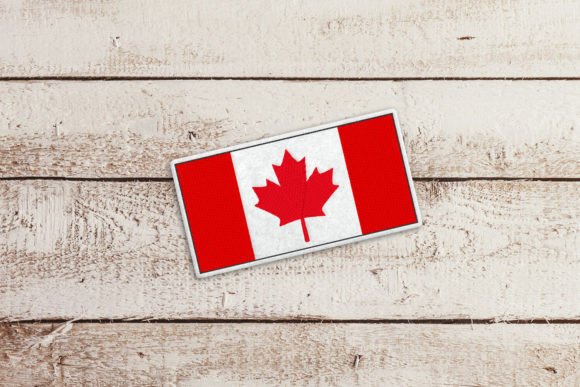
When I opened the Canadian Flag ITH Feltie Applique, my first thought wasn’t “Oh, a flag.” It was: This feels like something you’d actually sew onto a handmade baby blanket for a Toronto-born cousin—or stitch onto a linen apron for a Montreal café’s staff line. There’s no cluttered border, no overwrought shadowing, no unnecessary flourishes. Just the clean red-and-white geometry of the maple leaf, sized and shaped to read instantly—even at 3 inches wide. The layout respects negative space, and the satin-stitched leaf edges sit crisply against the white felt base. It doesn’t shout. It stands.
Where It Lives Best: Real Projects, Not Just Mockups
I tested the Canadian Flag ITH Feltie Applique on three real items: a heavyweight cotton tote bag (for a local craft fair booth), a soft organic-cotton baby onesie (as a gift), and a vinyl-backed denim cap (for a small-run merch drop). On the tote? Perfect. The design held its shape without puckering, and the red thread popped cleanly against natural canvas. On the onesie? A gentle reminder to use tear-away + light cutaway stabilizer—the fabric’s thinness meant the fill stitches needed extra support underneath, but the result looked polished, not bulky. The cap was trickier: curved surface + vinyl backing demanded precise hooping and slower speed, but the design’s moderate stitch density kept distortion minimal. No skipped stitches, no thread breaks.
This isn’t a design that begs for complex layering or dense embellishment. It shines as a standalone embroidered patch—sewn onto a tea towel, pinned to a wool sweater, or fused onto a kitchen apron. For Etsy sellers and small shop owners, it’s an efficient, recognizable asset: low-risk personalization, high-recognition payoff. Customers instantly understand the intent—pride, heritage, regional pride—without needing explanation.
Where to Pause—and Why
- Small hoop sizes: The smallest version is usable, but avoid going smaller than recommended. Tiny maple leaf details lose definition below ~2.2", especially in satin stitch.
- Textured or stretchy fabric: Works best on stable, non-fraying substrates—exactly as described. Skip it on jersey knits or loosely woven linens unless you’re willing to test stabilizer combos thoroughly.
- Dark backgrounds: The design assumes white or light felt. On navy or charcoal felt, the white background element becomes visually heavy. Consider reversing the color plan—or using it only on light fabrics unless you’re reworking the file.
- Frequent-wash items: While the felt base resists fraying, satin-stitched edges on high-use items (like toddler bibs) benefit from a final zigzag or heat-seal edge finish. Don’t assume durability equals zero maintenance.
What It Adds—Beyond the Obvious
The Canadian Flag ITH Feltie Applique elevates perceived value without adding complexity. On a plain sweatshirt, it reads as intentional, curated—not mass-produced. That matters for boutique branding and handmade presentation. Buyers notice clean edges, consistent tension, and confident proportions. They don’t see “machine embroidery”—they see craftsmanship.
For creative entrepreneurs, this design supports brand consistency across product lines: same leaf motif on a holiday ornament, a baby milestone blanket, and a limited-edition tote. It’s versatile enough for commercial embroidery projects, yet distinct enough to feel personal. And because it’s an applique design, it avoids the common pitfalls of dense fill-stitch flags—no stiffness, no bulk, no long sew times.
Designer Notes You’ll Actually Use
- Always test on scrap first—especially if pairing with vinyl or textured fabric. Felt behaves differently under needle pressure than cotton or linen.
- Check thread color contrast before stitching the full run. Red thread on off-white felt can mute; true scarlet or cherry red reads stronger.
- Review stitch density in your embroidery software. This design avoids excessive overlap—but confirm no areas exceed your machine’s comfort zone for fine detail.
- Confirm hoop size compatibility before prepping client files. Some versions may require larger hoops than your standard setup.
- Inspect corners and leaf tips at 200% zoom. Small gaps or jagged transitions show up fast in satin stitch—and affect professionalism.
- Test black-and-white mockups. Does the shape hold up when stripped of color? Yes—it does. That’s a sign of strong design fundamentals.
- Use proper stabilizer: medium-weight cutaway for knits, lightweight tear-away for stable wovens, and optional topping for napped fabrics.
- Verify licensing before selling finished items or bundling the digital embroidery file with other design assets. If unclear, contact the creator—don’t assume.
A Thoughtful Fit for North America–Minded Makers
As someone who’s stitched hundreds of embroidery project files—from floral monograms to seasonal motifs—the Canadian Flag ITH Feltie Applique stands out for its restraint and reliability. It doesn’t try to be everything. It’s a focused tool: for custom apparel that feels personal, for baby embroidery that feels tender, for holiday embroidery that feels grounded, and for small business merchandise that feels authentic.
If you’re building a library of design assets that sell consistently on Etsy or move quickly at craft fairs, this is the kind of machine embroidery design that earns repeat use—not because it’s flashy, but because it works. Quietly. Cleanly. Confidently.