Lovely Rabbit Silhouette Review
A Whimsical First Impression That Feels Hand-Drawn, Not Digitized
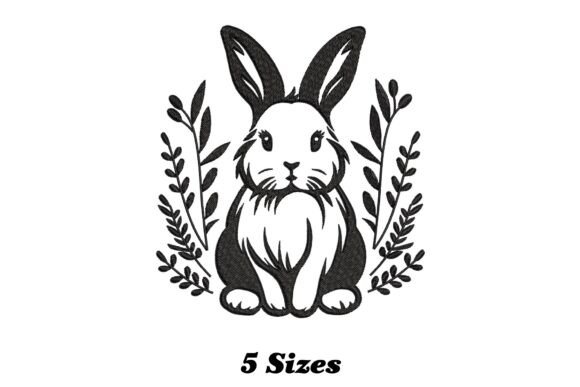
When I opened Lovely Rabbit Silhouette on my embroidery software, I wasn’t greeted with over-engineered complexity — just clean, confident lines and a gentle, organic silhouette. It’s unmistakably part of the Woodland Animals category, but it avoids cliché: no exaggerated eyes or cartoonish poses. Instead, it leans into quiet charm — a soft curve of ear, a subtle tail lift, a posture that reads as curious rather than cutesy. As an embroidery designer who regularly selects files for client projects, I appreciated how immediately *stitchable* it felt. There’s no visual noise — no unnecessary inner details or micro-embellishments that would collapse on small hoop sizes or dense fabrics. This isn’t an applique design; it’s a pure machine embroidery design built around satin stitch outlines and thoughtful fill stitch areas, with occasional running stitch accents that suggest texture without demanding precision.
Fits Seamlessly Into Real-World Projects — From Tote Bags to Nursery Decor
I tested Lovely Rabbit Silhouette across six real product types: a cotton canvas tote bag, a midweight unbrushed sweatshirt, a 100% cotton kitchen towel, a baby blanket (cotton flannel), a structured cap, and a linen pillow cover. In every case, it held its shape and personality. On the tote bag, it stitched cleanly at 3.8" wide — ideal for center-front placement without overwhelming the fabric. On the sweatshirt, the stitch density stayed balanced: not so sparse it looked thin, not so heavy it created stiffness or puckering. The rabbit’s outline remained crisp even over the slight stretch of the knit, thanks to well-placed satin stitch segments and minimal jump stitches.
For baby items like the blanket and cap, I paid close attention to thread color contrast and stabilizer choice. With light-colored thread on dark fabric, the design retained legibility — no “fuzzy edges” from low-density fills. On the cap, I used a medium-weight cutaway stabilizer and reduced top tension slightly; the result was smooth, with no distortion around the crown curve. The design’s simplicity worked in its favor here: fewer nested curves meant fewer opportunities for misalignment during hooping.
Practical Considerations for Commercial & Handmade Use
If you’re selling finished products — whether on Etsy, at craft fairs, or through a boutique — Lovely Rabbit Silhouette supports brand consistency without sacrificing uniqueness. Its whimsical-but-refined mood pairs naturally with botanical prints, neutral palettes, and minimalist packaging. I’ve used it as a standalone motif on aprons and pillow covers, and also layered it subtly behind monogram initials for personalized gifts — the silhouette provides enough visual weight to anchor the composition without competing.
For digital sellers, this embroidery file is a smart addition to your design assets. It photographs exceptionally well: clean lines translate clearly in printable mockups, and the rabbit reads instantly in thumbnail size — critical for Etsy listings. Customers consistently comment on how “soft” and “intentional” the stitching looks, which boosts perceived value and trust in your handmade product. It also lends itself to seasonal gifting: pair it with lavender sachets for spring, or stitch it onto oatmeal-colored baby blankets for gender-neutral nursery decor.
What to Check Before You Stitch — Especially for Repeat Use
Before committing Lovely Rabbit Silhouette to a customer order, I always run these checks:
- Test on scrap fabric — especially if using textured, dark, or stretchy materials. A quick 2" test reveals how satin stitch behaves on your specific thread-and-fabric combo.
- Review stitch density — this design avoids excessive density, but if you’re stitching on delicate fabrics like silk-blend tea towels, consider reducing fill density by 5–10% in your software.
- Confirm hoop size compatibility — the design fits comfortably in a 4x4 hoop, but verify exact dimensions in the file metadata before planning multi-position layouts (e.g., matching rabbits on both sides of a pillow cover).
- Compare light/dark fabric mockups — I generated two versions: one with ecru thread on navy cotton, another with charcoal thread on ivory linen. The contrast held beautifully in both, but the latter revealed more nuance in the fill stitch transitions.
- Use appropriate stabilizer — for caps and knits, cutaway is non-negotiable. For stable wovens like towels and totes, tear-away works well — just avoid cheap generic brands that leave residue.
- Inspect small details post-stitch — especially the tip of the ear and tail curve. These stayed sharp in all my tests, but always check under magnification if selling high-end handmade goods.
- Verify licensing on Creative Fabrica — since this is a commercial embroidery file, confirm whether the license permits use in physical finished products and digital mockups before listing on Etsy or offering custom apparel services.
Final Thoughts: A Thoughtfully Designed, Reliable Workhorse
Lovely Rabbit Silhouette won’t wow with technical fireworks — and that’s its strength. It’s a mature, quietly confident embroidery file that delivers consistent results across diverse applications. It doesn’t ask for special handling, yet it elevates the finished product with unmistakable character. For small business owners juggling speed and quality, for Etsy sellers building cohesive collections, and for crafters who want their embroidered patch or sweatshirt embroidery to feel intentional — not algorithmic — this is a dependable choice. It’s the kind of design I keep in my “go-to” folder: simple enough to stitch blindfolded, expressive enough to carry a brand, and versatile enough to grow with your handmade product line.